Frederick W. Garber (Cincinnati,1877-1950)
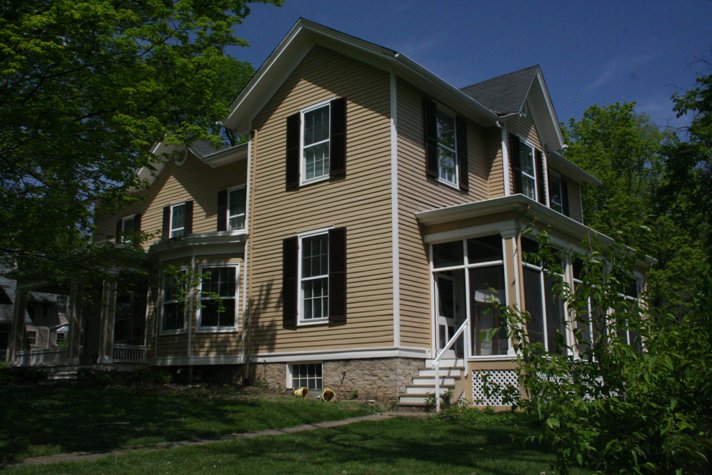
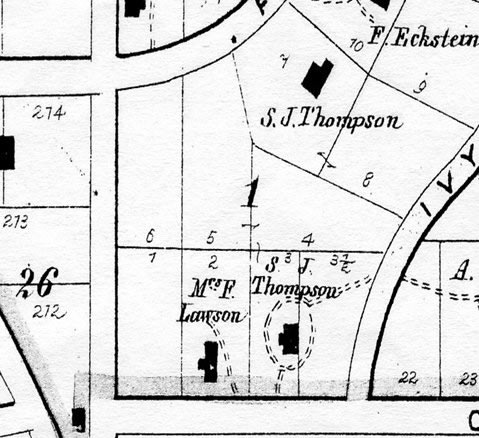
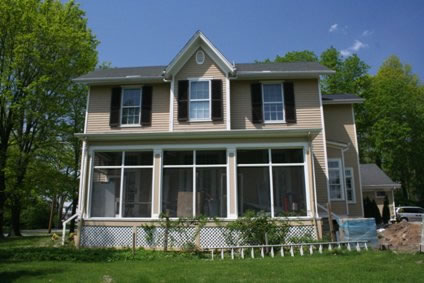
Frederick W. Garber (Cincinnati, 1877-1950), one of Cincinnati’s leading Neo-classicists, lived at 28 Oak Avenue. It is a curious house, which looks like two center-gabled houses put together in a T-shaped plan. The older section faces east, as shown on the 1869 map. The house was built circa 1867 for Eliza Lawson, and then acquired by Martha and Henry Woodward who moved to Glendale from the West End. Frederick Garber married the Woodwards’ daughter Alice, who was his partner’s sister, and lived here possibly from the date of his marriage until his death in 1950. Frederick and Alice raised four sons here – Stanley, Frederick W. Garber, Jr. (Fritz), Woodie, and Stedman – and the house was purchased by Fritz. In the 1930s or ’40s, Frederick and Alice divided the house into two, lived on the left side and rented the right side. Later, Woodie and his wife and children moved into the left side of the house while Fritz and his family lived on the right side with their mother Alice.
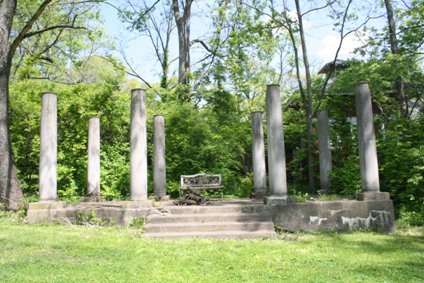
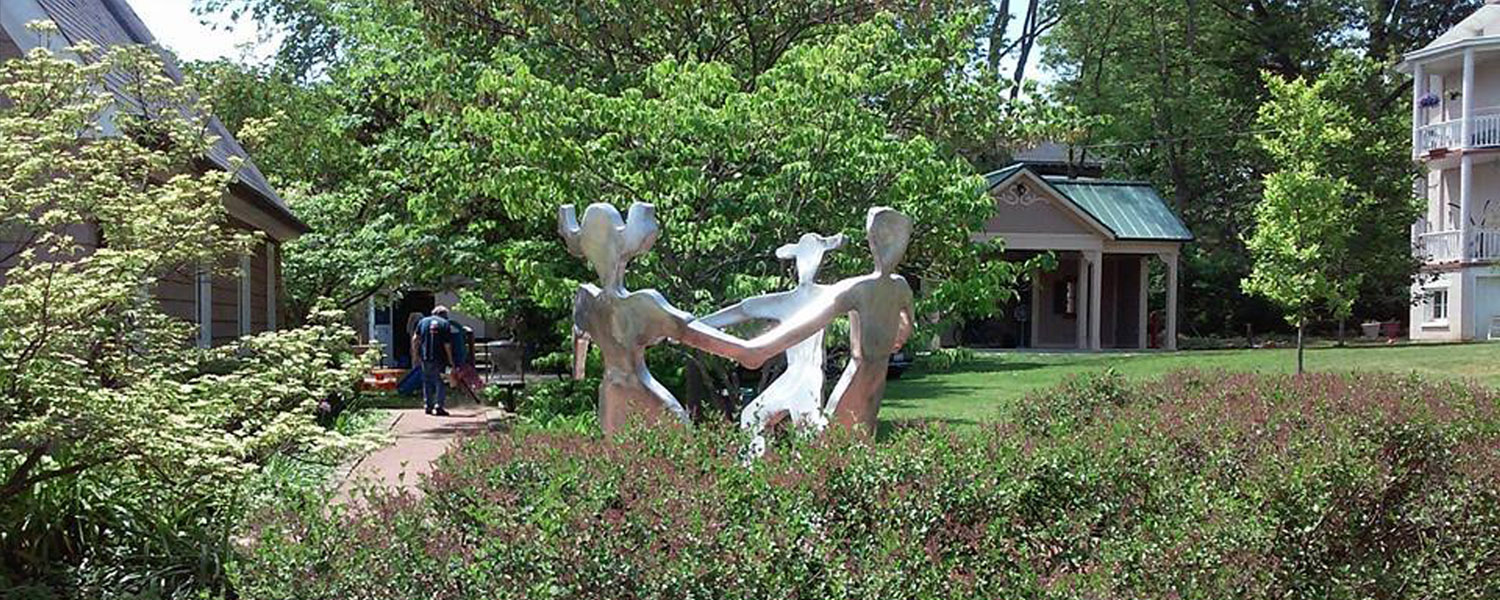
Frederick’s love of classicism is reflected in the colonnade in the backyard, which appears to be salvaged from an unknown old building. Garber was associated with Clifford B. Woodward from 1904 until the firm Garber & Woodward was dissolved in 1933, after which Garber practiced on his own until shortly before his death. Garber and Woodward were fellow-students, partners, and brothers-in-law. Both were educated at the Cincinnati Technical School, worked as draftsmen for Elzner & Anderson in Cincinnati, attended a two-year course in architecture at M.I.T. Garber was a fellow of the A.I.A. a board member of M.I.T. and an advisor to the art and archaeological department of Princeton University.
Garber & Woodward’s buildings were generally traditional in style and refined in approach. An early client was William Cooper Procter, for whom they designed a residence in Glendale, (1904), and a concrete summer house in Devon, L.I. (1909). They designed very compatible chapel additions to Christ Church Glendale in 1915 and Christ Church downtown in 1917. Among their finest works are many public schools throughout the city, including the early Guilford School near Lytle Park (1911), Walnut Hills High School (1929-31), with its domed library emulating Jefferson’s design for the University of Virginia, Withrow High School, and Western Hills High School.
Garber & Woodward worked with New York-based Cass Gilbert, designer of the Woolworth Building, on the superb Beaux-Arts former Union Central Life Insurance Building (1913). They also worked with John Russell Pope, architect of the National Gallery of Art in DC, on the Cincinnati Gas & Electric Company headquarters (1929) to create this classically inspired Art Deco masterpiece. The Dixie Terminal Building was a marvelous mixed use skyscraper combining an elegant barrel-vaulted shopping arcade with a bus terminal. For the Taft family, they created the tasteful Phelps Apartment House at East Fourth Street and remodeled the 1820 Baum-Longworth-Sinton-Taft House into the Taft Museum.